Blocked Toilet in Penrith: Causes, Safe DIY Steps, and When to Call a Plumber
A blocked toilet is one of those problems that can flip your whole day upside down—especially when it’s the only toilet in the house. In Penrith, we see toilet blockages all the time in family homes, rentals, older properties, and even newer builds where the plumbing is working hard under daily use. If you’re dealing with this right now, take a breath. Most blockages start small, and the sooner you act, the easier (and cheaper) they are to fix.
Because we specialise in residential plumbing in Penrith, we know the local patterns: homes with tree-lined yards, older sewer lines, and busy households tend to get repeat issues if the root cause isn’t handled. Sometimes it’s as simple as too much toilet paper. Other times, the blockage is only a symptom of a bigger drain problem—like tree roots in the sewer line, a cracked pipe, or a blockage further down where the toilet drain meets the main sewer.
This pillar guide walks you through: the most common causes of a blocked toilet in Penrith, the safest DIY steps you can try without damaging anything, and the exact signs it’s time to stop DIY and call a licensed plumber. You’ll also learn what a plumber actually does (and why it works), so you don’t feel stuck guessing.
Why blocked toilets are common in Penrith homes
Blocked toilets are common everywhere, but Penrith homes often have a few extra “ingredients” that make them more likely:
1) Busy households and high bathroom use In family homes, toilets get used constantly—before school, after sport, during weekend gatherings. More use means more toilet paper, more flushing, and a higher chance that someone accidentally flushes something that shouldn’t go down (especially kids). When that happens, it can quickly become a full blockage rather than a slow drain.
2) Older properties and ageing pipework Some homes in and around Penrith have older sewer and drainage systems. Older pipes can be rougher inside, slightly misaligned, or affected by years of shifting soil. That roughness gives waste and paper more places to cling to. Over time, this creates a “catch point” where clogs start forming again and again.
3) Tree roots and garden-heavy blocks Penrith has plenty of established yards and leafy streets. Trees naturally hunt for moisture, and sewer lines are an easy target if there’s even a tiny crack. Once roots get in, they can grow like a net—catching paper and waste until the line chokes up completely. That’s why we often recommend CCTV drain camera inspections and tree root removal when customers report repeat blockages.
4) Multiple fixtures feeding into shared drains In many homes, bathrooms, laundries, and kitchens connect into the same main drain line. That means what looks like a “toilet issue” can actually be a main drain issue. If your shower drains slowly at the same time your toilet is struggling, you may need professional drain/sewer cleaning or high-pressure water jetting, not just a plunger.
How a toilet actually blocks (simple explanation)
Toilets aren’t just straight pipes. Inside the toilet is a curved pathway called the trap (like a built-in U-shape). That trap always holds water, which blocks sewer smells from coming back up into your bathroom. It’s also where many blockages happen because it’s narrow and curved.
Most toilet blockages happen in one of these areas:
1) Inside the toilet trap (closest to you) This is where too much paper, waste, or a small object can lodge. These blockages sometimes respond well to proper plunging or a toilet auger.
2) In the drain line just past the toilet If wipes or foreign objects make it through the trap, they can clog the pipe just beyond the toilet. This is where DIY often fails because you can’t reach far enough safely. We use proper drain tools and clearing methods to remove the clog without damaging the toilet or pipes.
3) In the main sewer line (the bigger problem) A blockage in the main line can cause toilets and other drains to back up. This is where camera inspections, water jetting, and sometimes drain repairs become important. If you keep plunging a main-line blockage, you might temporarily relieve pressure—but the problem will return, often worse.
If you’re unsure where your blockage is, don’t worry—later in this guide you’ll find the signs that point to each type.
Common causes of a blocked toilet in Penrith
1) Too much toilet paper (it happens more than people think)
Toilet paper is designed to break down, but it still needs good water flow. When large wads of paper go down at once—especially with low-flow toilets—it can clump up and create a plug in the trap.
This often happens when:
someone is unwell and using more paper
kids panic-flush
guests don’t realise the toilet is already slow
What it looks like: water rises when you flush, drains slowly, and may eventually settle.
If this is the cause, proper plunging and the warm water method usually help. If it keeps happening, we can inspect for partial drain restriction and perform drain cleaning to remove buildup that paper is catching on.
2) “Flushable” wipes (one of the biggest repeat-clog causes)
Even wipes that say “flushable” often don’t break down like toilet paper. They twist, tangle, and snag inside pipes—especially where pipe joints meet. Over time, they form a net that catches more debris.
What it looks like: the toilet blocks repeatedly, or it “half flushes” for a while before fully blocking.
This is one of the situations where high-pressure water jetting and sewer cleaning can make a big difference, because it removes the sticky layer and tangled material that keeps trapping waste.
3) Hygiene products, nappies, cotton buds, and paper towel
These items are built to stay strong in water—so they don’t break down in your pipes. They can jam in the trap or further down in the drain.
What it looks like: sudden blockage right after something unusual was flushed, and plunging doesn’t do much.
If we suspect this type of blockage, we may use specialised tools or a CCTV camera inspection to confirm what’s stuck and remove it without damaging the toilet.
4) Kids’ toys and foreign objects
Toilets and kids can be a chaotic combo. Toys, pencils, toothbrushes, bottle caps—these can wedge in the trap or just beyond it.
What it looks like: instant blockage, the toilet won’t drain properly at all, and the water level keeps rising with each flush.
In these cases, plunging can sometimes make it worse by pushing the object deeper. A plumber can safely remove the toilet if needed and clear the obstruction correctly.
5) Buildup in the drain line (slow “growing” clogs)
Not all blockages happen suddenly. Some build up slowly over weeks or months, especially if the drain line has:
minor pipe damage
rough internal surfaces
low spots where water sits
old scale or mineral deposits
What it looks like: the toilet flushes okay sometimes, but clogs more often over time.
This is where professional drain/sewer cleaning and water jetting shine. Jetting doesn’t just poke a hole—it clears and rinses the line so it flows like it should.
6) Tree roots in the sewer line (a Penrith classic)
Tree roots are one of the most common causes of serious, repeated toilet blockages in leafy suburbs. Roots enter through tiny cracks and can create a web that traps paper and waste.
What it looks like:
toilet blocks often, even when nothing “weird” is flushed
you hear gurgling in the bathroom
drains elsewhere slow down too
We often confirm this with a CCTV drain camera inspection, then remove roots and clean the line. If needed, we can recommend targeted drain repairs to stop roots from returning.
7) Collapsed, cracked, or sagging pipes
Sometimes the pipe itself is the problem. A cracked pipe can let soil in. A sagging pipe can create a low spot where waste settles. A collapsed pipe can block flow almost completely.
What it looks like: recurring blockages, slow drains around the home, and sometimes smells outside.
A camera inspection helps locate the exact issue so repairs can be targeted rather than guessing.
8) Main sewer or septic system problems
If the main system is blocked or failing, the toilet may back up even if nothing is wrong with the toilet itself.
What it looks like:
multiple drains backing up at once
wastewater appearing in shower drains
strong sewer smell
external overflow issues (if your property has an overflow relief gully)
This is not a DIY situation. It needs professional assessment and clearing.
Signs your blocked toilet is a bigger drain issue
A single toilet blockage can often be handled quickly. But these signs usually mean the blockage is deeper and affects your drain system:
Gurgling sounds when you flush (air trapped in the pipe)
Water rises in the shower or bathtub when the toilet is flushed
Slow drains in multiple rooms
A sewer smell coming from bathroom drains
The toilet blocks again and again, even after plunging
Outdoor smells or wet patches near sewer lines (sometimes)
These are the cases where we typically recommend:
CCTV camera inspections to find the cause
high-pressure water jetting to fully clear the line
tree root removal and drain repairs if roots or damage are found
Safety first: what NOT to do with a blocked toilet
DIY is okay if you do it safely. These are the common mistakes that cause damage or make the blockage worse:
Don’t keep flushing. This is how bathrooms flood. One extra flush can overflow dirty water onto floors and into grout lines, skirting boards, and carpets.
Don’t use boiling water. Boiling water can crack the porcelain bowl or damage seals.
Don’t pour lots of harsh drain chemicals. Many chemical cleaners don’t work on solid blockages and can corrode pipes. They also make it dangerous for a plumber to work on the toilet later (chemical splash risk).
Don’t mix chemicals. Mixing cleaners can create toxic fumes.
Don’t force random objects down the toilet. Wires and coat hangers can scratch porcelain and push the clog deeper. If you damage the toilet trap, it can turn into a bigger repair job.
If the toilet is close to overflowing, stop and call a plumber—especially if you have only one bathroom.
Safe DIY steps to try (in the right order)
Step 1: Stop the overflow risk
If the water is high:
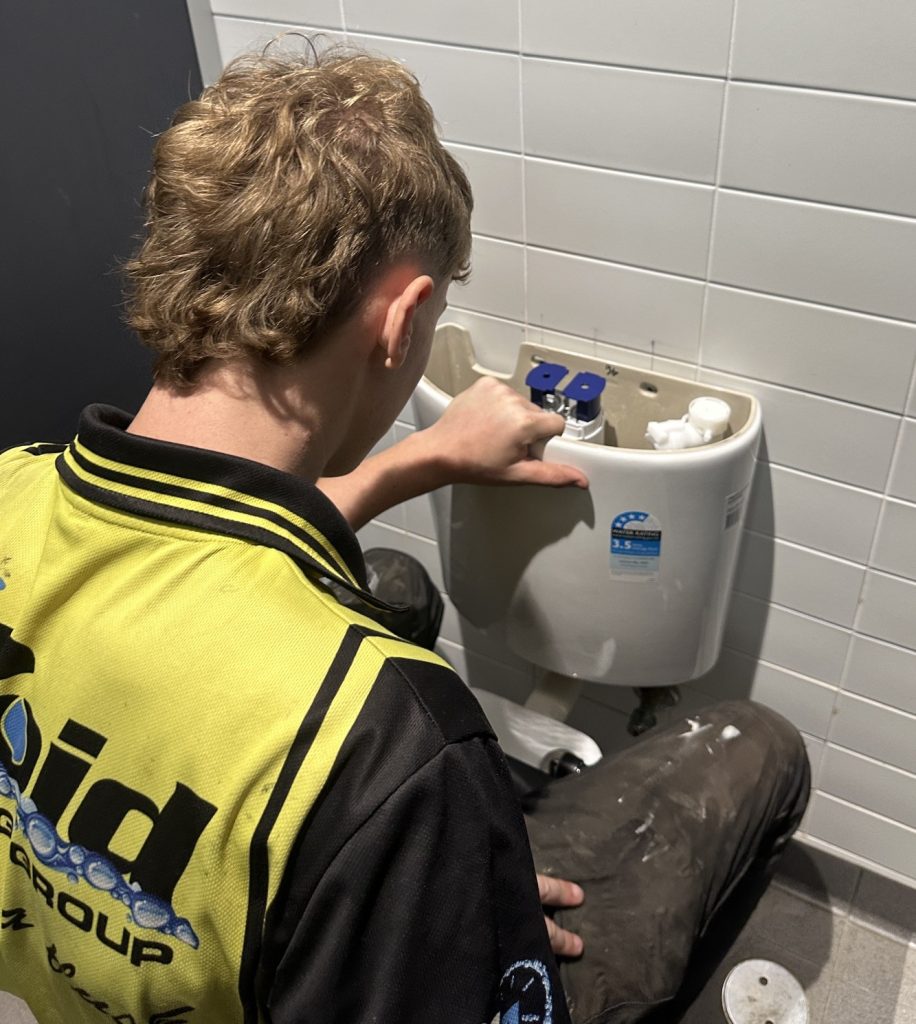
Remove the cistern lid.
If water is still running, gently lift the float to stop refilling.
If it won’t stop, turn off the shut-off valve near the wall.
This prevents a flood while you work.
Step 2: Check for the obvious (without “deep fishing”)
Put on gloves and look for anything visible near the bowl opening. If you can see a toy or object, remove it carefully.
If you can’t see anything, don’t reach deep into the trap where you can’t see what you’re grabbing.
Step 3: Plunge the right way (this is the make-or-break step)
Use a toilet plunger with a flange (it’s shaped for toilets). A flat plunger is better for sinks and often won’t seal.
How to do it:
Ensure the plunger cup is submerged.
Press down gently first to get a seal.
Pump firmly 10–15 times without breaking the seal.
Pull up quickly.
Repeat 2–3 rounds if needed.
If the water starts to drop, you’re winning.
Step 4: Dish soap + warm water (best for soft clogs)
Add a generous squirt of dish soap.
Pour warm water (not boiling).
Wait 10–15 minutes.
Try plunging again.
This helps lubricate and break up soft clogs like paper and waste.
Step 5: Use a toilet auger (if you have one)
A toilet auger is designed for the toilet shape and helps break up or hook clogs safely.
If you hit strong resistance early and nothing improves, stop—this could be a solid object.
Step 6: Clean and disinfect
Even without an overflow, bacteria can splash. Wipe surfaces and wash hands thoroughly.
When to call a plumber (clear, no-guessing rules)
Call a plumber immediately if:
the toilet is overflowing
you’ve tried plunging correctly and nothing changes
you suspect a foreign object
the blockage comes back often
other drains are slow or backing up
there are strong sewer smells
you hear gurgling or bubbling in nearby drains
At Discount Hot Water, we handle blocked toilets as part of complete residential plumbing in Penrith, so we can fix the immediate problem and also check for bigger issues like drain blockages, roots, or pipe damage.
What a plumber will do to fix a blocked toilet properly
1) Quick diagnostics and flow testing
We’ll check whether it’s:
a toilet trap clog
a drain line clog
a main sewer issue affecting multiple fixtures
We also do basic inspections and testing to confirm what’s happening before using heavy tools.
2) Professional clearing tools (stronger, safer results)
We may use:
advanced augers and clearing equipment
drain/sewer cleaning methods to remove the clog
water jetting to clear buildup and restore full flow
Jetting is especially helpful if the drain is full of sludge, wipes, and buildup that keeps re-catching waste.
3) CCTV drain camera inspection
If the blockage is recurring, a camera inspection is one of the best investments because it shows:
tree roots
cracked or collapsed pipes
low spots and misalignment
buildup zones
This prevents repeat callouts and helps you fix the real cause.
4) Tree root removal and targeted drain repairs
If roots are found, we remove them and clean the drain line properly. If the pipe is damaged, we can recommend repairs so roots and debris don’t keep coming back.
Preventing blocked toilets in Penrith (easy habits that work)
Make toilet rules simple
Only flush:
pee
poo
toilet paper
Everything else goes in the bin—even wipes.
Teach kids early
Kids don’t mean harm, they’re just curious. A quick rule like “toilets aren’t bins” prevents a lot of emergencies.
Stay ahead of repeat problems
If your toilet blocks more than once every few months, consider:
a drain camera inspection
water jetting
checking for tree root intrusion
Prevention is cheaper than emergency flood cleanup.
Blocked toilet vs blocked drain (quick comparison)
If it’s more than one fixture, it’s time to stop plunging and get drain clearing.
Apartments, rentals, and commercial properties in Penrith
Rentals
Report it early. Water damage and sewage overflow can become expensive quickly.
Apartments
Shared lines mean your neighbour’s clog can affect you. A plumber may need to assess the common drain line.
Businesses
Blocked toilets affect staff, customers, and hygiene compliance. We provide commercial plumbing and can respond quickly to reduce downtime, especially if your business relies on customer bathrooms.
Emergency situations: when you need 24/7 help
Call urgently if:
sewage backs up into the toilet or shower
water is flooding the bathroom
strong sewer smell indoors
the blockage is in a public or commercial bathroom
We offer 24/7 emergency plumbing, so you’re not left dealing with a flood or health hazard alone.
Call Discount Hot Water for blocked toilet help in Penrith
If your toilet is blocked right now—or you’re tired of the same problem coming back—Discount Hot Water is ready to help with fast, practical solutions for residential plumbing in Penrith.
We don’t just make it “flush again.” We locate the cause and fix it properly using services that match the problem, including:
24/7 emergency plumbing
Blocked drain clearing and repairs
High-pressure water jetting
Drain/sewer cleaning
CCTV camera drain inspections
Tree root removal
General plumbing repairs and installations (taps, toilets, showers, inspections and testing)
Leak detection (water, shower, pool, and gas)
Gas fitting and gas plumbing (installs, appliance installs, repairs, gas leak detection)
Hot water system supply, installation, servicing, and repairs (gas, electric, instant, heat pumps, solar, and commercial)
Water filtration solutions for cleaner, better-tasting water
Call Discount Hot Water on 1291607738 to book a plumber in Penrith, get clear advice, and stop a blocked toilet from turning into a bigger (and messier) drain emergency.
Our Team of Professionally Qualified and Licensed Plumbers
Expect Professional and Friendly Plumbers to attend your Plumbing Problems
Michael Turner
We called Discount hot Water at 9 am and had a scheduled appointment between noon and 5 pm the same day. Fifteen minutes later they called back and said there was a cancellation and could be here in 45 minutes. Scott arrived promptly and was very courteous and professional. He diagnosed the problem quickly, went to get the parts and the hot water was back on and running properly by 11 am. Scott was friendly and knowledgeable and took good care of us. Would definitely use Discount Hot Water again.
Reuben Silva
Very good experience with this company!
Had someone out the same day I called. Diagnosed and fixed our AC with ease. The technician Scott was very helpful and showed me things i could do to help improve the efficiency of our hot water system. 10/10 - would recommend Discount Hot Water to everyone!
Melanie Collins
My Discount Hot Water representative was Scott and he was timely on arrival and called before he came to alert me regarding his arrival. He performed the necessary inspection on my hot water system and informed me that our system checked out and no repairs were needed. No leaks were discovered also. Highly recommend this company for their customer service and repairs only as needed to keep my hot water system operating properly.